


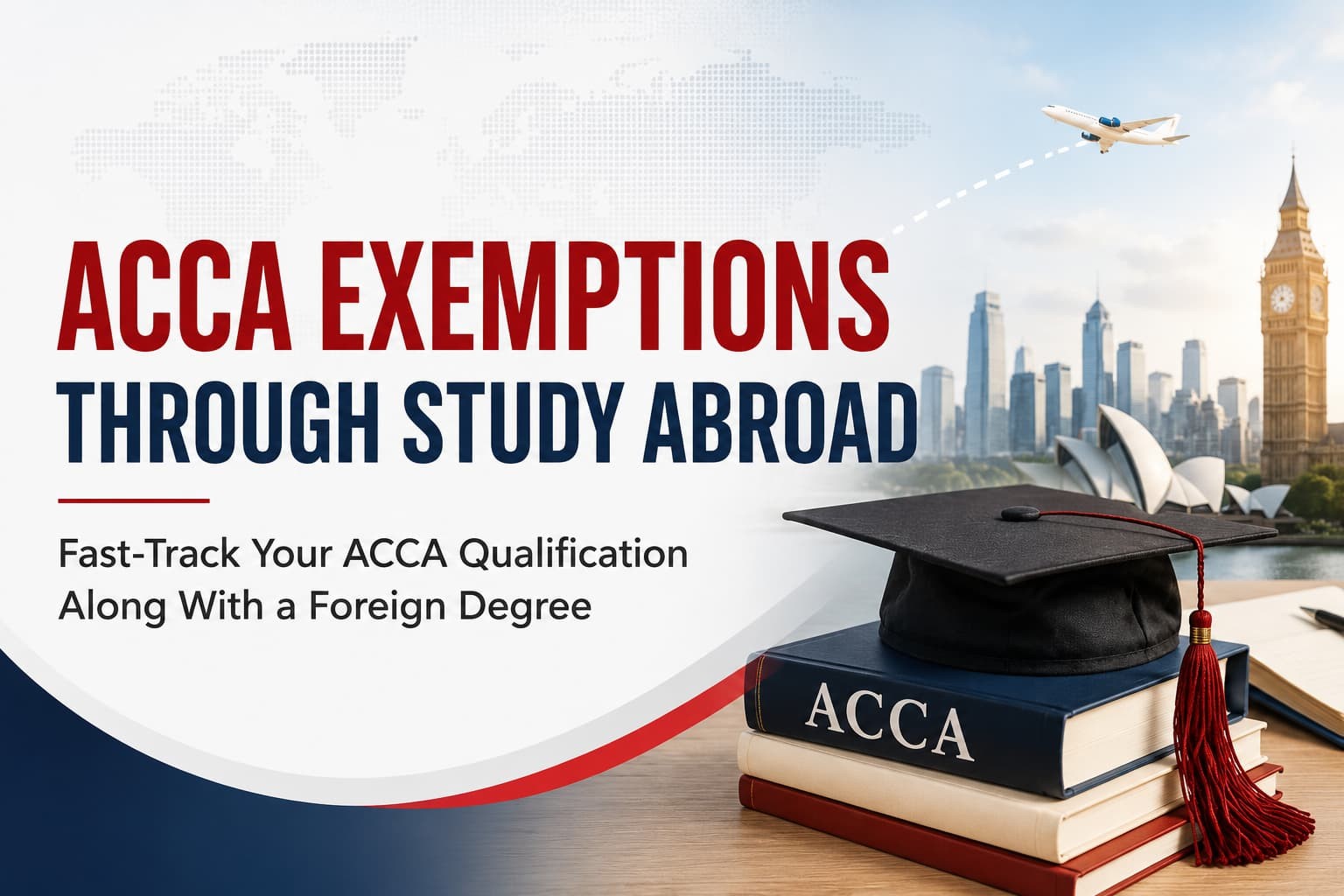
The global business landscape is becoming increasingly interconnected, creating a growing demand for qualified accounting and finance professionals. Among the many professional accounting qualifications available today, ACCA (Association of Chartered Certified Accountants) stands out as one of the most recognised and respected credentials worldwide.
For students who aspire to build an international career in accounting, finance, taxation, auditing, or business management, ACCA offers a pathway that is accepted across the globe. What many students do not realise, however, is that certain university programmes abroad can help them earn ACCA exemptions, significantly reducing the number of examinations they need to complete.
This means that by choosing the right degree programme, students can work towards a recognised international qualification while simultaneously obtaining a foreign university degree. The result is a powerful combination that can save time, effort, and money.
What Is ACCA?
ACCA is a globally recognised professional accounting body that equips individuals with the knowledge and skills required to work in accounting, auditing, taxation, financial management, and business leadership roles.
Unlike some accounting qualifications that are primarily recognised within a specific country, ACCA has established a strong international presence. Today, ACCA-qualified professionals can pursue career opportunities in 180+ countries around the world.
One of the major reasons behind this global recognition is the network of mutual recognition agreements that ACCA has established with various national accounting bodies. These agreements can help professionals gain recognition in different jurisdictions and, in certain cases, fast-track membership with other professional organisations.
As a result, ACCA has become one of the most attractive qualifications for students seeking international career mobility.
Why Is ACCA Becoming Increasingly Popular?
The demand for ACCA-qualified professionals continues to grow as businesses expand across borders and financial regulations become more complex.
Employers value ACCA professionals because they possess a strong understanding of:
- Financial accounting
- Management accounting
- Taxation
- Auditing and assurance
- Corporate finance
- Business strategy
- Ethics and professional standards
ACCA professionals can be found working in multinational corporations, accounting firms, financial institutions, government organisations, consulting companies, and public sector entities.
The qualification also opens doors to a wide range of career paths, including:
- Accountant
- Auditor
- Tax Consultant
- Financial Analyst
- Finance Manager
- Business Consultant
- Risk Analyst
- Chief Financial Officer (CFO)
- Financial Controller
- Finance Director
- Internal Auditor
- External Auditor
- Forensic Accountant
Because of its international recognition and broad career scope, ACCA continues to attract students from around the world.
How Many Exams Are Required to Complete ACCA?
Under the standard ACCA pathway, students are generally required to complete 13 papers to become ACCA-qualified.
These examinations cover a range of accounting, finance, taxation, auditing, and strategic business subjects designed to prepare candidates for professional practice.
For many students, completing all 13 papers requires significant commitment in terms of time, preparation, and examination fees.
However, there is good news. Not every student needs to sit all 13 examinations.
What Are ACCA Exemptions?
ACCA exemptions allow students to skip certain examinations if they have already studied equivalent subjects as part of an approved academic qualification.
The purpose of these exemptions is to avoid duplication of learning. If a university programme already covers topics that meet ACCA's academic standards, students may receive credit for those subjects.
In simple terms, ACCA recognises that certain degree programmes teach knowledge that overlaps with parts of the ACCA syllabus.
Therefore, students who complete eligible programmes may be exempt from several ACCA papers.
This can significantly shorten the journey towards becoming fully ACCA-qualified.
A note on Masters in Strategic Professional Accounting and Finance
If you have already completed, or possess equivalent learning for, the ACCA Applied Knowledge and Applied Skills papers, this programme offers an efficient two-in-one pathway to professional and academic advancement. Students can earn a Master's degree while simultaneously preparing for four ACCA Strategic Professional examinations, enabling them to accelerate their journey towards full ACCA membership. This integrated approach not only enhances specialist accounting and finance expertise but also provides a valuable competitive advantage in the global job market.
Which Courses Can Offer ACCA Exemptions?
Many universities, particularly in destinations such as the United Kingdom, offer degree programmes that are aligned with ACCA requirements.
Examples include:
- BSc Accounting and Finance
- BSc Accounting
- BSc Finance and Accounting
- MSc Taxation and Financial Accounting
- MSc Accounting and Finance
- MSc Professional Accounting
Depending on the university, course structure, and ACCA accreditation status, students may receive exemptions from multiple ACCA papers.
In some cases, eligible programmes can offer exemptions for up to nine papers.
This means students may only need to complete the remaining ACCA examinations after graduation, dramatically reducing the overall workload.
It is important to note that exemptions vary between universities and programmes. Students should always verify the latest exemption status before applying.
Not only the UK, Ireland too has emerged as one of Europe's leading destinations for finance and professional accounting careers. By pursuing an MSc in Accounting & Finance in institutions such as Griffith College alongside ACCA, students can gain up to nine ACCA exemptions, significantly reducing the time and effort required to achieve a full professional qualification. Graduates can expect starting salaries from approximately €36,000, with the potential for a further 20–30% increase upon completing ACCA. Combined with Ireland's strong demand for finance professionals and a clear pathway towards a General Employment Permit, this route offers an excellent foundation for building a successful international career in accounting, auditing, taxation, and financial management.
How Do ACCA Exemptions Benefit Students?
One of the biggest advantages of studying an ACCA accredited programme abroad is the amount of time that can be saved. With fewer ACCA papers remaining after graduation, students can enter the job market earlier, allowing them to focus on gaining valuable practical experience and securing professional roles at a much sooner stage in their careers.
In addition, ACCA exemptions provide graduates with a significant competitive advantage. They stand out from peers who must begin the full ACCA qualification journey from scratch, demonstrating both academic achievement and a faster pathway towards professional accreditation.
Instead of starting from scratch after graduation, students can begin their professional qualification journey while completing their degree.
Some key benefits include:
1. Reduced Number of ACCA Exams
Students may be exempt from several papers, reducing the total number of examinations required.
2. Faster Route to Qualification
With fewer papers to complete, students can become ACCA-qualified much sooner.
3. Cost Savings
Exemptions can reduce examination-related expenses, helping students save money over the course of their ACCA journey.
4. International Degree Plus Professional Qualification
Students graduate with both a recognised foreign university degree and a globally respected professional qualification pathway.
5. Improved Employability
Employers often value candidates who possess both academic knowledge and professional credentials.
Is an ACCA-Integrated Degree Worth Considering?
For students interested in accounting, finance, taxation, auditing, or business management, combining a university degree with ACCA exemptions can be a highly strategic decision.
Rather than pursuing a degree first and then beginning professional studies later, students can integrate both pathways from the start.
This approach not only makes the learning journey more efficient but also helps students enter the job market with stronger credentials and a clearer career direction.
As international employers continue to seek finance professionals with globally recognised qualifications, ACCA remains one of the strongest options available.
Conclusion
Choosing the right university programme can have a significant impact on your future career. If your goal is to build a global career in accounting or finance, selecting a degree that offers ACCA exemptions can provide a valuable advantage. By carefully selecting an eligible programme, students can save time, reduce costs, and graduate with both a respected international degree and a head start towards one of the world's most recognised accounting qualifications.
If you are considering study abroad and want to explore courses that can be combined with ACCA exemptions, seeking expert guidance can help you identify the most suitable universities and programmes based on your career goals. To know more about universities offering courses that can be combined with ACCA, connect with the expert team at Edroots International. Book your free one-to-one counselling session today at 9349 555 333.

Enquiry Form